ELI-Enabled Turtle Seizure Part of a Larger Global Wildlife Trafficking Trend
On December 10, 2025, during ELI’s Operation VALLARTA, intelligence provided to USG authorities by ELI led to the seizure of 930 live endangered turtles at the Los Angeles International Airport (LAX). This was a record-setting interdiction of animals at LAX, which were removed from illegal wildlife trade (IWT) supply chains thanks to the swift action of the US Fish & Wildlife Service (USFWS). The operation was also notable for the presence of approximately 20 critically endangered Vallarta mud turtles (Kinosternonvogti) from Mexico, pushing the shipment’s estimated value up to $7 million. These “golden” turtles, of which there are only a few hundred left, sell for $26,000 to $30,000 in China.
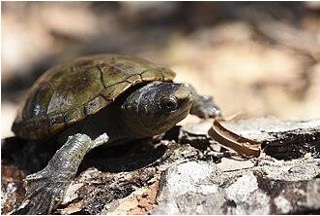
Photo: Vallarta mud turtle. Credit: Agencia Informativa Conacyt / UdeG via Wikicommons
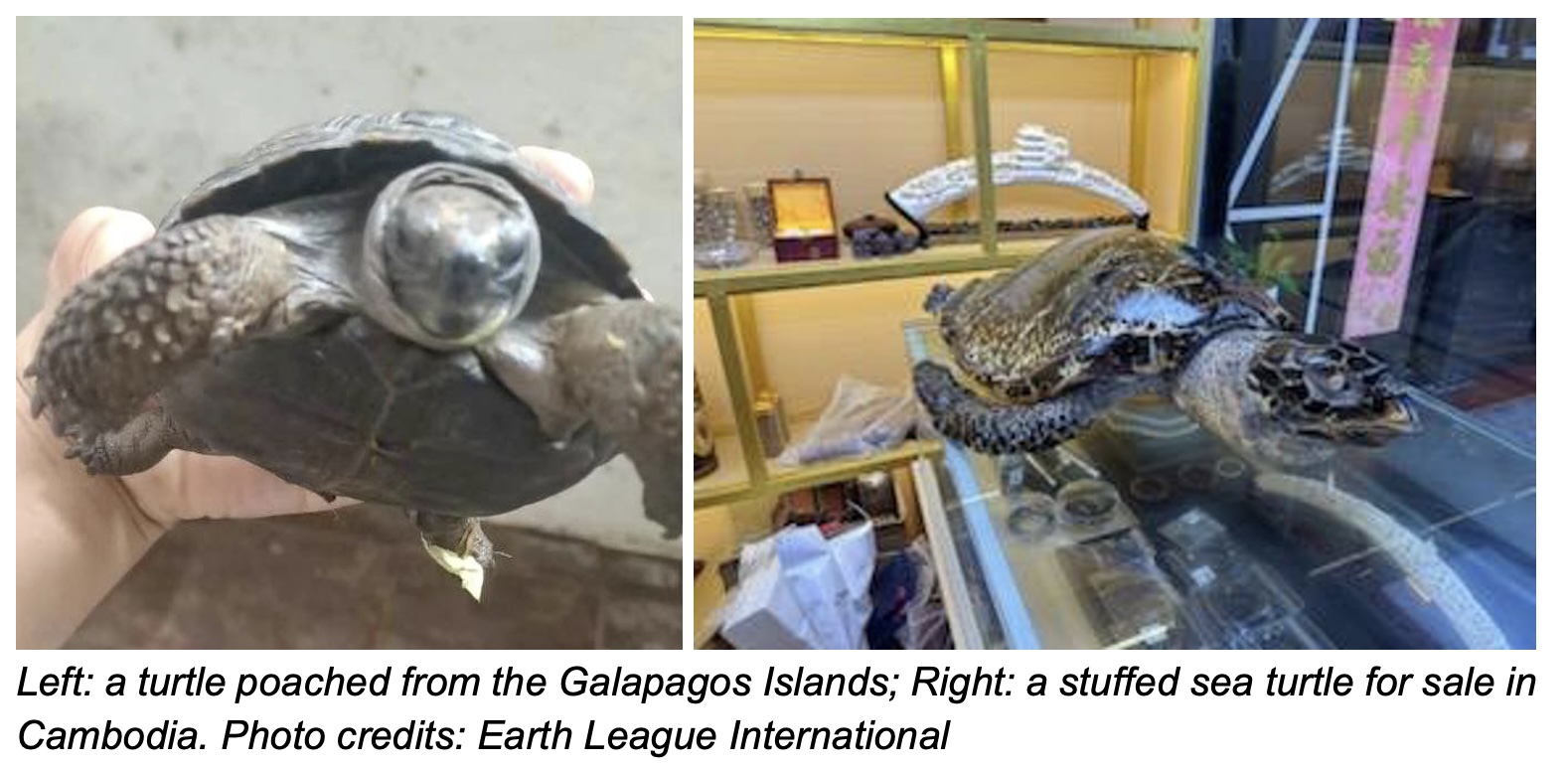
Over the years, traffickers have directly offered to sell ELI’s field teams endangered turtles on multiple occasions during investigations, including the Vallarta mud turtles in the U.S., stuffed protected sea turtles in Southeast Asia, and even rare species from the Galapagos in Ecuador.
While the LAX seizure was particularly large, a review of press reports shows that shipments of turtles (footnotes i ii iii iv) are unfortunately common. Globally, the turtle trade is a big business, often destined for the exotic pet trade in East Asia. Since the early 2000s, this trade has expanded rapidly, due in part to the expansion of global online commerce platforms. (v) Traffickers are drawn to turtles because they often retail for high prices, are quiet and easily handled, and depending on conditions may survive travel better than other reptiles.vi They are often bound in duct tape, wrapped in socks, and concealed inside boxes labeled as other items. (vii viii ) A high proportion of seizures have been in India, Mexico, the U.S., Hong Kong, and mainland China, though in illicit economies it can be hard to determine whether high numbers of interdictions indicate higher trade volumes, better detection and enforcement, or both.
Some of the largest reported interdictions in recent years were of turtles sourced from India, Sri Lanka, and Madagascar, with commonly trafficked species including the Indian Star tortoise (Geochelone elegans),ix and the Radiated tortoise (Astrochelys radiata): both are CITES Appendix I species. Reports on seizures in India and Hong Kong in 2025-2026 show frequent mentions Indian Tent turtles (Pangshura tentoria), Indian Flapshell turtles (Lissemys punctata), Brahminy River turtle (Hardella thurjii), all of which are CITES Appendix II species.
Seizure reporting regarding turtles sourced from the U.S. and Mexico and trafficked into Asian markets points to the popularity of once-common species such as diamondback terrapins, box turtles, spotted turtles, mud turtles, and wood turtles. Red-eared slider turtles are often mentioned as well, and while this species is not endangered, they are invasive in many regions outside their native habitats in parts of the U.S. and Mexico. During ELI investigations, turtles sourced inMexico were often moved into the US for onward shipment across the Pacific. In the U.S., prosecuted cases suggest the systematic abuse of student visas by Chinese nationals.
High Markups Make Turtle Trafficking Highly Profitable Despite High Mortality
Not all pet owners may know that much of the turtle trade is illegal, that criminal groups are the main beneficiaries, or how many animals die en route for every one that becomes someone’s prized pet–though some certainly do and are willing to tip endangered species closer to extinction to possess one. After a multi-site raid and seizure in Mexico in late 2025 that included 2,339 turtles, approximately 600 died.(xi) Even when diverted from the IWT, many animals cannot be returned to the wild due to risk of disease and other factors. However, in more encouraging cases, hundreds have been repatriated back to their original habitats to continue breeding,(xii) a proportion that will hopefully increase as more formal post-seizure care networks such as the Wildlife Confiscations Network are established and expanded.xiii
Traffickers are of course aware of the illegality of their actions and high animal mortality rates, and heedless of the damage they do because the profit margins are considerable. UNODC data collected between 2007 and 2017 found that Radiated tortoises from Madagascar sold for as little as $2-10 USD at the source but reached retail prices of $1,000-2,000 USD in consumer markets.(xiv) In ELI’s investigation, Vallarta turtles cost traffickers from $2000 – $4000, meaning the sale price per tiny (surviving) turtle represents a markup of anywhere from 6.5 times to 15 times the sourcing cost. The substantial markup not only creates incentives for traffickers to pursue this trade, but rising prices that correspond with increased scarcity can entice new actors into the trade, creating a snowball effect at crucial tipping points for species’ survival. Once populations are no longer viable for trade or an ecosystem has been plundered, traffickers simply pivot to different species and source regions.
Online Platforms Put Turtles into a Globally Accessible Marketplace
Endangered turtles are often trafficked through online platforms, including Facebook, Telegram, TikTok, WeChat and Whatsapp. Research conducted by TRAFFIC between June 2021 and July 2023 into online wildlife sales found 22,497 advertisements for wild animals, with 3,865 of these for tortoises and freshwater turtles.(xv) GI-TOC conducted a similar study between April 2024 and March 2026 and found Facebook to be the central nexus of online wildlife sales, with 74%of the total advertisements originating from Facebook and Facebook advertisements accounting for 98.53% of the total advertised value.(xvi) This digital infrastructure allows traffickers a larger geographic reach. By connecting sellers directly with international buyers, online platforms expand the market for endangered turtles–and countless other endangered species– and make cross-border sales easier to coordinate.
More Effectively Combatting the Illegal Trade in Turtles
For this reason, and the lack of success by online platforms in removing IWT ads, ELI and other organizations in this space strongly recommend that an exception be made to Section 230 of the Communications Decency Act. The law, which generally shields websites and web hosts from liability for user-posted content, already has one legislatedexception for human trafficking. This has been successfully used to hold accountable those who profit from crime. ELI supports an additional exception for the illegal wildlife trade, given that online platforms profit from a lax approach to removing sales posts that is further incentivized by a lack of legal liability. In late 2025, Reuters reported that Facebook’s own internal calculations estimated that 10% of its revenue in 2024–the year it posted $164.5 billion in revenue–would come from illegal activity such as scams and ads for contraband.xvii
To effectively combat further damage to turtle populations around the world, a multi-pronged approach is necessary. Firsthand intelligence such as ELI’s pinpoints the people and methods behind the headline-making seizures, allowing cases to be built to remove these actors from the IWT. Stronger laws and penalties for wildlife trafficking–including for key enablers such as online platforms–are necessary to change criminals’ risk-benefit calculations and make this tradefar less profitable. For animals that get intercepted and diverted, formal care networks can boost survival and reintroduction rates to help mitigate species loss. Given the volume of the turtle trade, efforts by all stakeholders will need to be increased, and more closely coordinated for a holistic approach that covers all stages of illicit supply chains.
i https://www.pib.gov.in/PressReleasePage.aspx?PRID=1962751®=48&lang=2
ii https://www.hindustantimes.com/india-news/chennai-man-held-at-kolkata-airport-with-707-red-eared-slider-turtles-101784808902064.html
iii https://www.bbc.com/news/world-latin-america-67771166
iv https://mexicodailypost.com/2026/08/09/authorities-seize-350-turtles-at-the-matamoros-airport-in-tamaulipas/
v https://bioone.org/journals/chelonian-conservation-and-biology/volume-15/issue-2/CCB-1216.1/A-Short-
Review-of-the-International-Trade-of-Wild-Tortoises/10.2744/CCB-1216.1.full
vi https://www.unodc.org/documents/data-and-analysis/wildlife/2020/WWLC20_Chapter_5_Reptiles.pdf
vii https://www.nbcnews.com/world/asia/china-man-jail-smuggling-turtles-socks-hong-kong-rcna224471
viii https://www.justice.gov/opa/pr/chinese-national-sentenced-smuggling-turtles-united-states-hong-kong
ix https://news.mongabay.com/2022/03/record-seizures-mark-sri-lankas-rise-as-a-smuggling-hub-for-star-tortoises/
x https://www.occrp.org/en/news/us-sentences-man-who-ran-network-that-trafficked-turtles-to-china
xi https://news.mongabay.com/2025/11/massive-turtle-bust-in-mexico-reveals-wild-west-of-wildlife-trafficking/
xii https://www.fox10phoenix.com/news/two-suspects-charged-in-largest-seizure-of-turtles-in-recent-history-fwc-says
xiii https://www.aza.org/connect-stories/stories/over-2000-wild-turtles-seized-in-mexico-conservationists-race-to-save-survivors
xiv https://www.unodc.org/documents/data-and-analysis/wildlife/2020/WWLC20_Chapter_5_Reptiles.pdf
xv https://www.traffic.org/publications/reports/new-research-shows-alarming-levels-of-online-illegal-wildlife-trade-in-vietnam/
xvi https://globalinitiative.net/wp-content/uploads/2026/04/Russell-J-Gray-Simone-Haysom-Wildlife-has-a-
Facebook-problem-GI-TOC-April-2026.pdf
xvii https://investor.atmeta.com/investor-news/press-release-details/2025/Meta-Reports-Fourth-Quarter-and-Full-Year-2024-Results/