Operation VALLARTA
ELI Intelligence Leads to What Is Believed to Be One of the Largest Single Seizures of Live Trafficked Wildlife at a U.S. Airport: 930 Endangered Turtles Intercepted at the Los Angeles International Airport (LAX), Including One of the World’s Rarest Species, dealing a $7M blow to traffickers.
Earth League International (ELI) announced yesterday that intelligence gathered by its operatives led to the seizure of 930 live endangered turtles at Los Angeles International Airport (LAX) on December 10, 2025. The announcement of this seizure has been delayed until now due to operational security.
The U.S. Fish and Wildlife Service (FWS), acting on ELI’s intelligence, intercepted the shipment just before the animals were to be flown to South Korea and then onward to Thailand. From Thailand, the turtles would have been smuggled into China.
The seizure dealt a significant financial blow to the trafficking network, with the shipment estimated to be worth over $7 million once resold on the Asian black market.
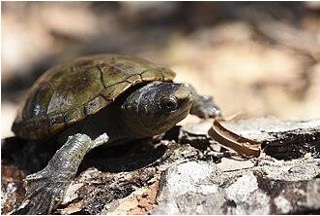
Among the seized animals were approximately 20 Vallarta mud turtles (Kinosternon vogti), one of the most critically endangered turtle species on the planet, with only a few hundred individuals believed to remain in the wild — a population driven to the brink largely by the illegal pet trade.
The turtles were destined for Asian pet collectors, with the Vallarta mud turtles to be sold for up to $30,000 each in China.
The turtles had been individually wrapped in plastic with small holes to allow them to breathe. The aquatic turtles, including the Vallarta mud turtles, had been individually inserted into wet socks to keep them alive during transport (see photo below). Many of the turtles would likely not have survived the long flights to Asia.
The seizure was the result of Operation VALLARTA, an ELI intelligence operation targeting major players involved in wildlife trafficking and other serious crimes and operating between Mexico, the U.S. and Asia.
The turtles had been transported from Mexico by truck. The truck then continued to Los Angeles, where the animals were prepared for international shipment.
Following the seizure, FWS coordinated the placement of the rescued turtles across multiple wildlife sanctuaries and rescue centers to ensure their care and rehabilitation.
ELI generally does not support seizures that lack broader investigative action against the trafficking networks. Standalone seizures spook traffickers, hinder future intelligence collection, and often prompt them to simply acquire more wildlife at the source — triggering additional poaching. In this case, with 930 live animals at immediate risk, saving their lives took priority.
ELI commends the U.S. Fish and Wildlife Service for their swift and professional response upon receiving ELI’s intelligence. The speed and coordination with which FWS acted was critical to ensuring the successful interception of the shipment and the rescue of 930 living animals. This operation is a powerful example of what becomes possible when law enforcement agencies and intelligence-driven NGOs work together.
The Value of Intelligence-Led Conservation
Operation VALLARTA proves once again that professional intelligence work—including undercover operations and human intelligence—is essential, not just effective, in fighting transnational environmental crime. You cannot dismantle sophisticated, multinational criminal organizations with traditional conservation enforcement alone, let alone address crime convergence. This is exactly what ELI was built to do, and we will continue to do it.