SAFEGUARDING MARINE ECOSYSTEMS: OPERATION FAKE GOLD
The Vaquita’s Survival: Investigating Totoaba and other Marine Products, Crime Convergence and the Role of Mexican Cartels and Chinese Networks
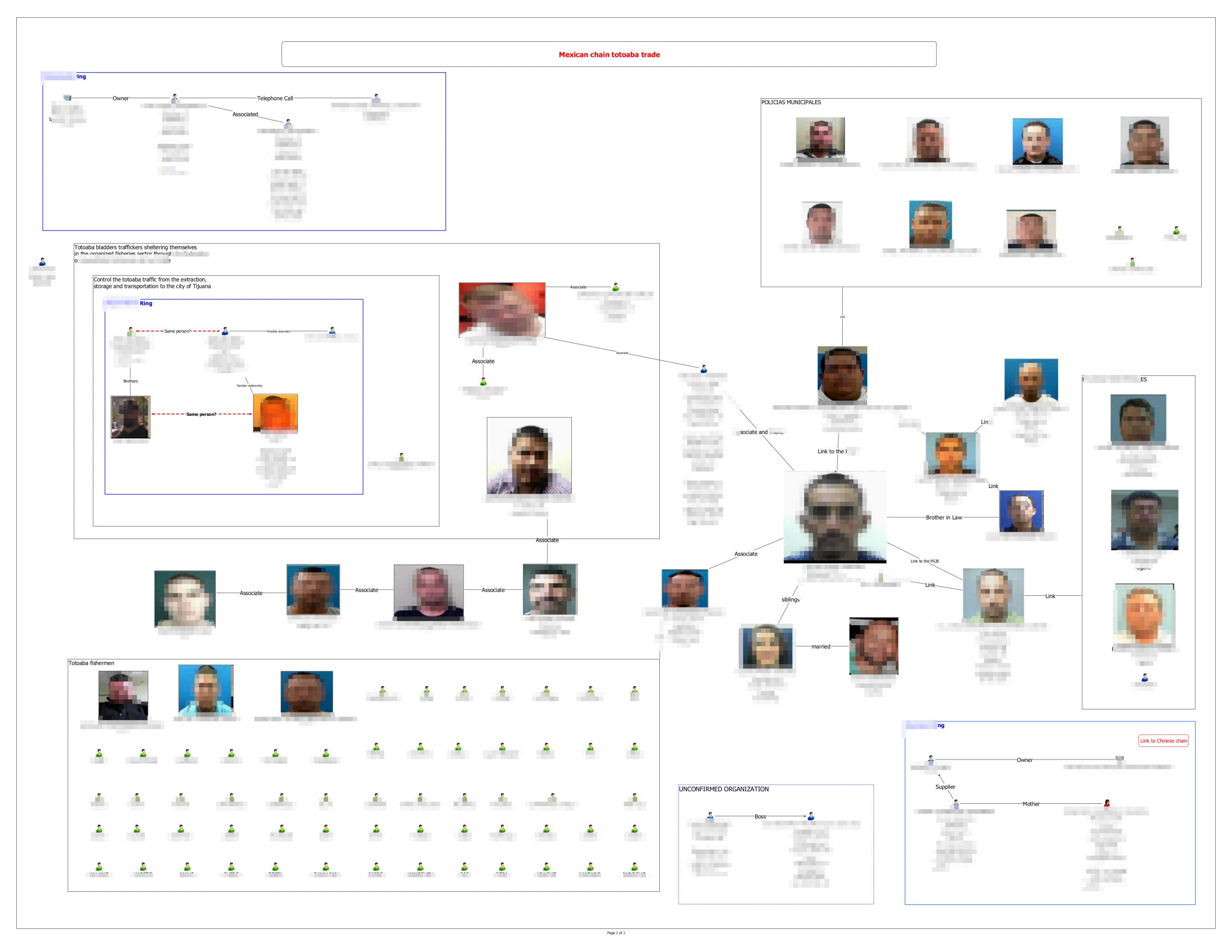
In response to the dire circumstances facing the vaquita as by-catch of the illegal totoaba trade, in 2018 Earth League International (ELI) launched an intelligence gathering operation called Operation FAKE GOLD. Since then, ELI has been discreetly investigating totoaba and other marine products trafficking, and the Vaquita crisis, mapping and researching the entire illicit totoaba maw (swim bladder) supply chain, from the Baja California peninsula in Mexico to the United States and Southern China’s Guangdong Province, and identifying all the most important players along the supply chain.
ELI investigative operations identified 23 transnational totoaba and wildlife trafficking networks operating between Mexico, the U.S. and China, as well as over 260 Persons of Interest (including high-level international traffickers, middleman, local politicians and members of Mexican cartels), along with a significant convergence with other serious crimes, including money laundering, human smuggling and drugs.
FAKE GOLD is an ongoing operation, currently providing U.S. and Mexican authorities with Confidential Intelligence Briefs (CIBs) and intelligence updates in order to support the investigative work of law enforcement agencies and facilitate the arrest of the key players. Given the nature of this delicate and dangerous project, part of our activities are confidential and shared only with our law enforcement partners.
FIRST HIGH-PROFILE ARRESTS IN 2023
With intelligence and technical support of Earth League International (ELI), and following a long and complex investigation, U.S. law enforcement agencies dismantled two major totoaba trafficking operations between Mexico, the United States, and China. In May 2023, near San Diego, authorities arrested two important international totoaba and marine wildlife traffickers, individuals who had been operating for years across borders, generating millions of dollars in illicit profits while remaining largely undisturbed.
The individuals arrested are:
– Zifeng “Gabriel” Wu, a Chinese citizen, was indicted on a conspiracy charge and eight other charges related to buying, selling, and importing totoaba bladders, as well as other endangered and protected marine animals, including critically endangered hawksbill sea turtles, seahorses, and sea cucumbers.
– Chin M. Wang and a second defendant were also charged with four counts related to the sale and importation of totoaba bladders. Wang and her co-defendant allegedly sold 23 of the bladders to a law enforcement informant for $247,000. Wang allegedly told a confidential informant that she had a total of $2 million worth of totoaba bladders.
These arrests were made possible by the discreet and sustained investigative work of ELI’s team over several years as part of Operation FAKE GOLD.
In October 2025, both traffickers pleaded guilty in U.S. court and are now cooperating with authorities. This case represents one of the most significant operational successes to date in the fight against totoaba trafficking and a clear example of how long-term intelligence work can lead to the disruption of high-level transnational criminal networks.
CLICH KERE FOR MORE INFORMATION ON THE OPERATION NEAR SAN DIEGO AND THE INDIVIDUALS ARRESTED
THE BACKGROUND STORY & THE CURRENT STATUS OF THE VAQUITA
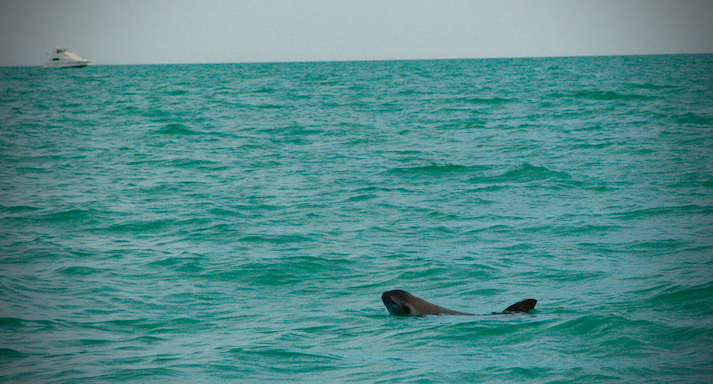
The vaquita, the world’s smallest and most endangered porpoise, is nearly extinct due to China’s demand for the swim bladders, or ‘maws,’ from a giant Mexican fish called the totoaba, a highly sought-after illegal marine product in China, purchased primarily by wealthy individuals for use in traditional medicine, luxury consumption, and as a status symbol, often served at banquets or given as an investment-grade gift.
A 2023 survey estimated that there were between 10 and 13 vaquitas alive in the wild (based on visual and acoustic detections) — possibly fewer than 19 overall in the upper Gulf. A 2024 survey found fewer sightings — between 6 and 8 individuals observed; that is considered a minimum population estimate, given the survey only covers part of the historical range.
The latest 2025 survey data (ongoing) are being used to update distribution and population status — preliminary findings suggest vaquitas are still present in parts of their range, but no definitive global population number has yet been confirmed in publicly released summary documents.
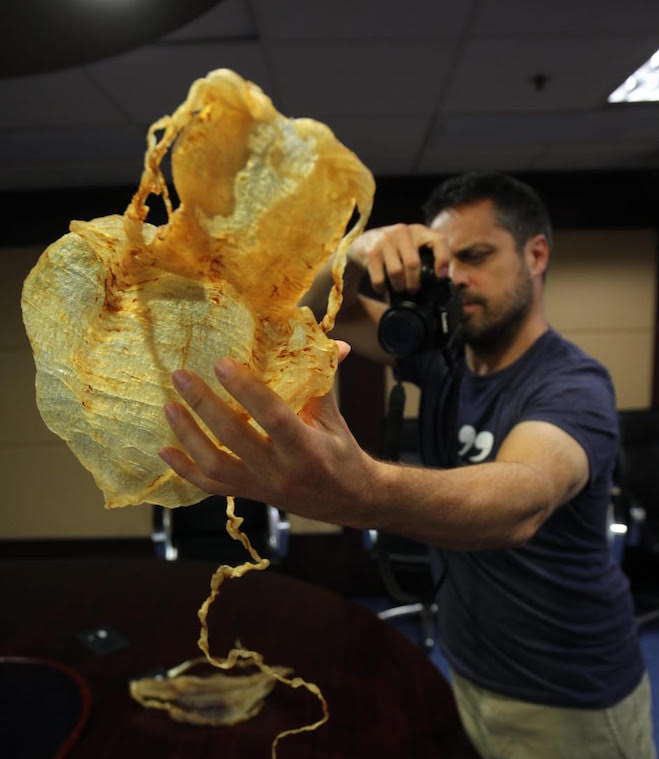
The current wholesale price of totoaba maw in Mexico and the United States is around $20 per gram, while on the Chinese black market large swim bladders can reach up to $46 per gram. A fisherman in San Felipe, Baja California (Mexico) can earn more in a single night by catching a few totoabas than they might otherwise earn in an entire year.
Through Operation FAKE GOLD, Earth League International has identified what can only be described as “totoaba cartels” in Mexico — formed through the collaboration between Mexican cartels, including groups such as Los Chapitos, and Chinese traffickers. The illegal supply chain begins in the coastal villages of San Felipe and Santa Clara along the Gulf of California, but quickly shifts to central smuggling hubs in cities such as Tijuana, Mexicali, Mexico City, and even several cities in the United States, including San Diego and Los Angeles.
Our investigation has found that, often with the complicity of local public officials, the cartels finance Mexican fishers and fishing cooperatives and then sell the swim bladders to a group of well-connected Chinese traders and businessmen residing in Mexico. These traders, in turn, facilitate the smuggling of totoaba maws to China, the final and most lucrative stage of the supply chain.
Additional findings (redacted) from Operation Fake Gold:
- San Felipe, Mexicali, and Tijuana, Mexico, are the primary hotspots of the bottom half of the illicit totoaba maw supply chain.
- Totoaba trafficking is facilitated by both Mexican and Chinese networks based in Baja California – what we coined ‘Totoaba Cartels.’ They are involved in other criminal activities and illegal trafficking. We identified at least 23 main Totoaba Cartels and over 260 Persons of Interest.
- Totoaba trafficking has become as lucrative, easier, and less risky than drug trafficking – this is why the totoaba cartels formed.
- Among other networks, a so-called Elder Chinese “gang” out of Tijuana developed and ran the totoaba maw trade for a number of years, along with other illegal businesses, allegedly including money laundering and human smuggling.
- Smugglers transport totoaba maws to China primarily via air routes, always avoiding direct flights, and generally in checked luggage.
- The maws are smuggled through transit countries such as Hong Kong, South Korea, Japan, and Taiwan, many times along routes used for drug trafficking according to Earth League International’s sources.
- The Unites States is both transit and destination country, with a growing demand for totoaba.
- Demand for totoaba maws in China are relatively stable even though the product is illegal, with buyers generally well-off, middle age or older, and from Shantou and the greater Guangdong Province.
- Totoaba maw pricing varies significantly based on sex, weight, and appearance.
- Three significant totoaba maw wholesalers were identified in China. Each supplies a significant quantity of maws to the retail market in Southern China.
-

Dead totoaba on the beach in San Felipe, Mexico. Photo credit: Earth League International
Earth League International believes that dismantling all the various networks associated with the totoaba black market is the best chance to end totoaba trafficking, and protect the Laquita. This effort should begin with the middlemen – those Chinese nationals in Mexico who supply the market in China. Ultimately, though, the root of the problem, the demand, must also be destroyed.
We identified the complex factors surrounding the extinction of the vaquita and the destruction of an incredibly important ecosystem. It is not only about the fate of the vaquita, but of the entire eco-system of the upper Gulf of California. Efforts now must shift toward the protection of the Gulf of California in general. The Gulf contains incredible marine life that will also be destroyed by the continued use of gillnets and the continued exploitation of its wildlife.
Our Team has worked tirelessly in the field to gather the intelligence needed by authorities to disrupt the totoaba illegal supply chain, and ultimately, curb illegal fishing in the Gulf of California. Much of the detailed data gathered during Operation Fake Gold only appears in a series of Confidential Intelligence Briefs (CIB) that has been prepared and shared with U.S. and Mexican government agencies. The CIBs contain all the non-redacted data gathered regarding the key players, their networks and enablers, and the complete modus operandi of these traffickers and traders, including concrete evidence of illegal activity uncovered during the investigation, as well as hundreds of photos and hours of relevant undercover footage.
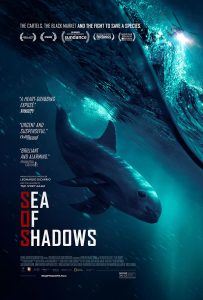 OPERATION FAKE GOLD FEATURED IN THE DOCUMENTARY ‘SEA OF SHADOWS’
Finally, the initial phase of Operation FAKE GOLD has been featured in the most important documentary on the vaquita to date, ‘Sea of Shadows’, acquired and distributed by National Geographic/Disney+, and executive produced by Leonardo DiCaprio.
Produced by Terra Mater Factual Studios in collaboration with Leonardo DiCaprio’s Appian Way, it was directed by Richard Ladkani/Malaika Pictures. Sea of Shadows, premiered at the Sundance Film Festival 2019, winning the Audience Award.