OPERATION ENCANTO
Cocaine Cows: How Illegal Cattle Ranching, Land Grabbing and Cocaine Destroy the Amazon
For three years, ELI’s undercover field teams worked inside some of the most remote and dangerous territory in the Colombian Amazon: national parks under the control of armed groups, jungle river corridors, and the auction yards where illegally raised cattle are laundered into legal supply chains.
Our new report, Cocaine Cows, is the result. It names the actors rapidly destroying protected parts of the Amazon through illegal cattle ranching, land grabbing and cocaine, and shows how they do it, where, and how much they earn. It also identifies the businesses and officials who make it possible.
Download the report here: ELI – Operation ENCANTO – November 2026
The findings at a glance
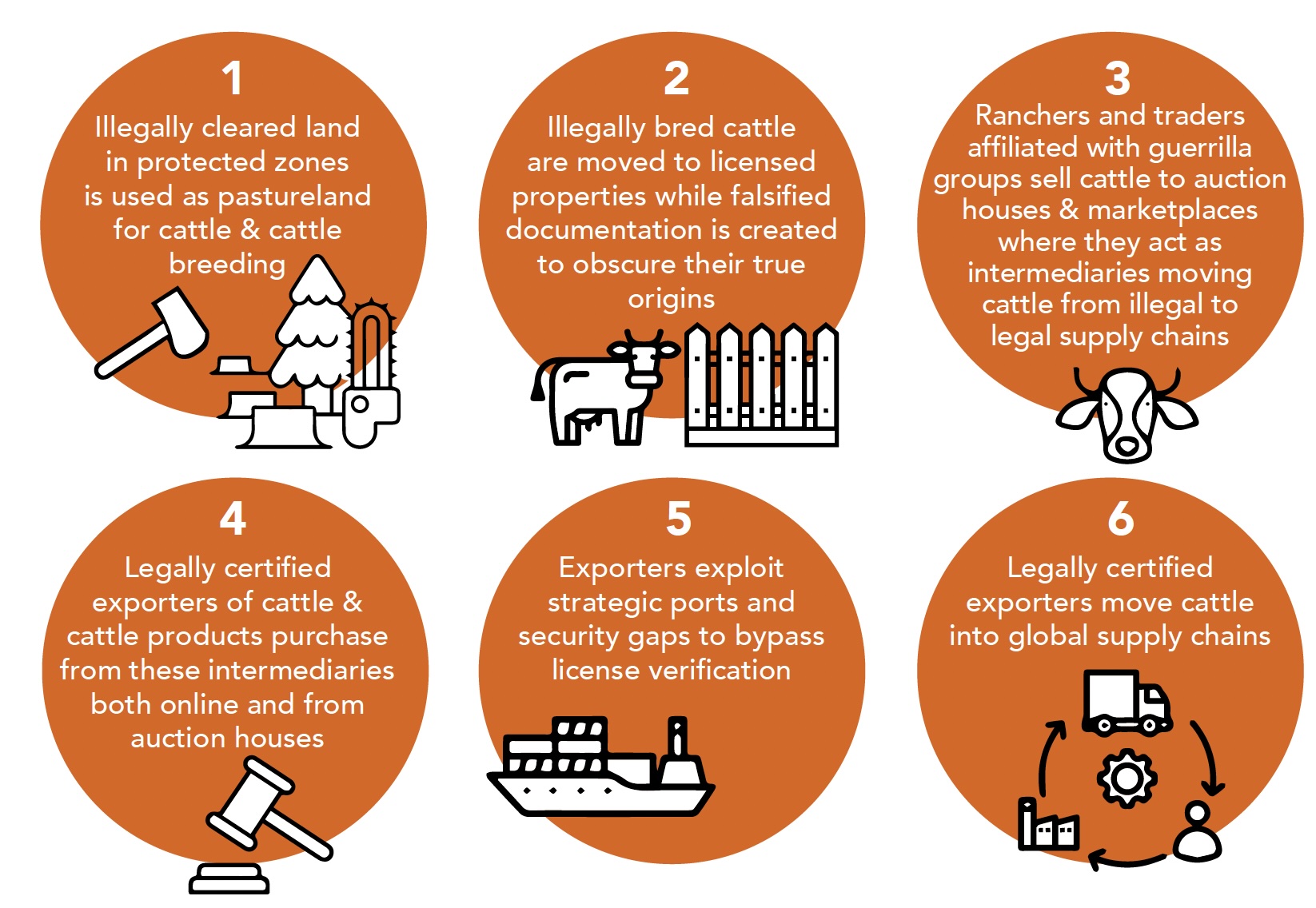
Cattle ranching, much of it illegal, remains the biggest driver of deforestation across the Amazon Basin
In the Colombian Amazon, cocaine money keeps it expanding: coca revenue from Putumayo and Amazonas is often laundered through the cattle sector in Meta, Guaviare and Caquetá, then reinvested in more land grabbing, illegal logging and mining
We mapped 315 businesses owned by FARC dissident groups inside three ostensibly protected areas (Chiribiquete, Nukak and La Macarena), from the type of business to the responsible group to GPS coordinates
230 of them are illegal cattle ranches, attributable to nine separate FARC dissident (FARC-D) groups
We collected intelligence on dozens of Persons of Interest (POIs), including several members of organized crime groups operating in the region
We identified 12 entities involved in laundering cattle into legal supply chains, three times the four previously known to Colombia’s public prosecutor’s office (Fiscalía)
Intelligence from where satellites can’t see
Satellite imagery can show where the forest is disappearing. It cannot show who is clearing it, who owns the cattle, which company launders them, or whose signature is on the paperwork. That takes human intelligence, gathered on the ground, over time, from the people running the system.
Operation ENCANTO was not a satellite study or a review of secondary sources. It was three years of continuous fieldwork on the ground. It was a long-term intelligence operation that kept returning to areas few outsiders can reach. To enter parts of Meta and Guaviare, ELI had to negotiate access with the FARC dissident groups that control them, and our team travelled under FARC-D escort. Those escorts spoke openly. They showed our team where ranching is concentrated inside the national parks and protected areas, the roads and rivers used to move cattle out, and how animals raised illegally are mixed into licensed herds and given new paperwork. Access was not always granted. The FARC-D 40th Front issued ELI a written warning barring entry to Tinigua National Park, which has lost roughly a third of its forest since 2018.
Our operatives met with ranchers, intermediaries, auction house employees and traffickers. ELI also built relationships with park rangers, prosecutors, government officials and representatives of the Nukak Indigenous community, people who see the failures firsthand. Many conversations were recorded, and the report includes candid excerpts translated from Spanish and Mandarin, together with photos and maps from ELI’s field teams.
The result is granular, firsthand intelligence that completes the picture that remote sensing and desk research can only outline.
“I am particularly proud of Operation ENCANTO, because it embodies what intelligence really is: long-term, deep, and built on talking with everyone, all the players, including those who are not easy to talk to. I hope this intelligence will be used by all stakeholders, from governments to civil society, to better protect the Amazon and the people who depend on it.”
— Andrea Crosta, Founder and Executive Director, Earth League International

Naming who’s behind the destruction
In most accounts of Amazon deforestation, one question goes unanswered: who? ELI set out to put names on the illegal ranches and the other illicit economies destroying national parks and bioreserves, because accountability starts with identification. The report documents:
- FARC dissident groups that rejected the 2016 peace accords and use the territory they still control for land grabbing and ranching. They “tax” the rivers cattle travel on and launder cocaine proceeds through the cattle sector.
- The legal-economy enablers without whom the system could not survive: ranchers who take jungle cattle onto licensed properties, auction houses, export companies, veterinary and agricultural officials who sell certifications, notaries who formalize stolen land, and the sector’s own trade associations. ELI’s evidence points to regulatory capture, not isolated wrongdoing.
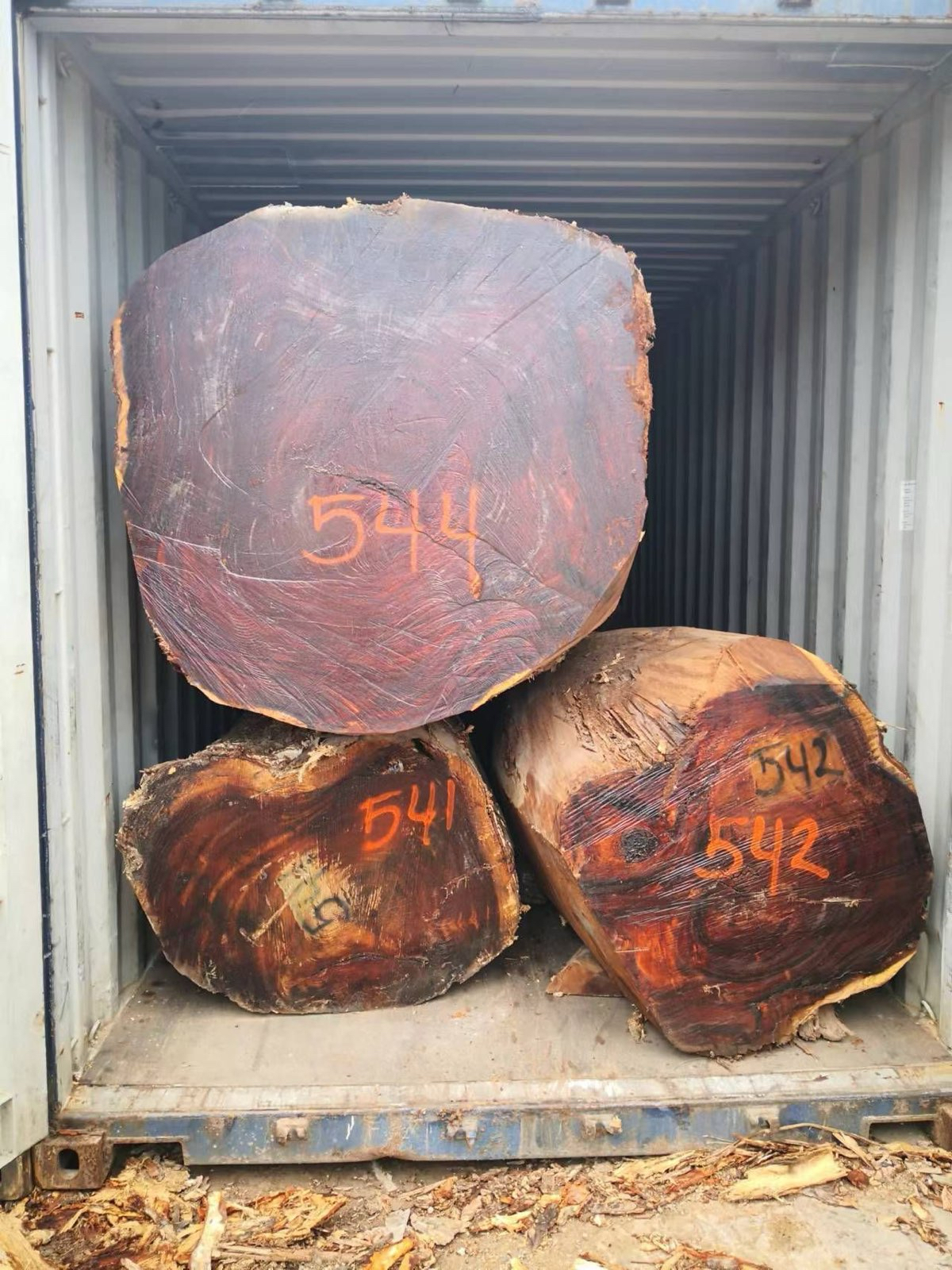
- Transnational organized crime converging on the region: Brazil’s Primeiro Comando da Capital (PCC) and Comando Vermelho (CV) shifting cocaine flows toward Europe and Asia; cattle owned by Mexico’s Sinaloa Cartel and CJNG inside Nukak; the Clan del Golfo; and a Chinese network sourcing Colombian timber through identified intermediaries.
This is Environmental Crime Convergence in practice. Cattle, cocaine, timber, land and fuel move through the same rivers, roads and airstrips, are taxed by the same armed groups, and feed the same criminal finances. In the public report, persons of interest are identified by code to protect ongoing investigations.
Why it matters for the forest, wildlife and Indigenous peoples
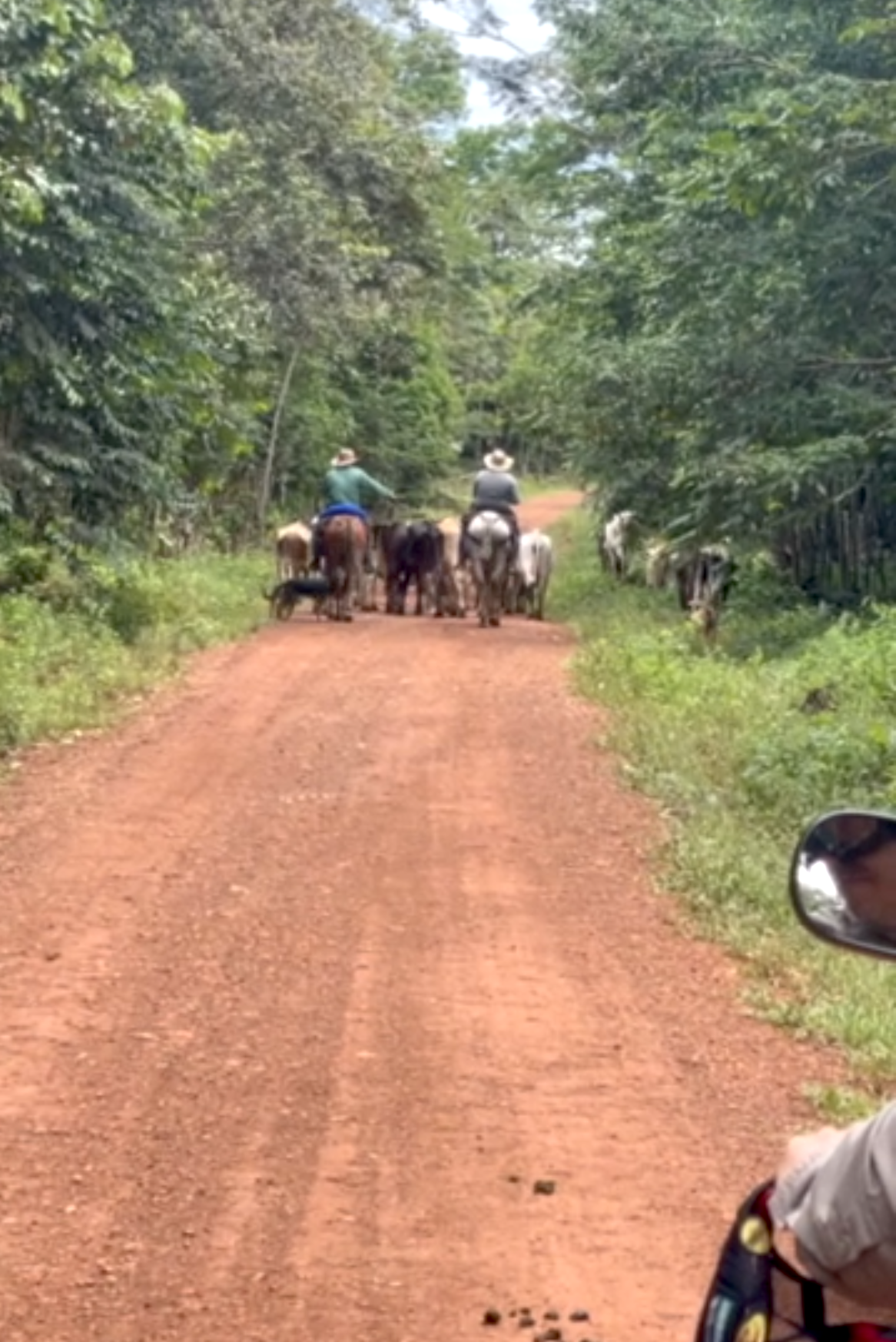
Illegal cattle ranching remains the biggest driver of deforestation in the Amazon Basin, and cocaine money keeps it expanding. Coca revenue from Putumayo and Amazonas is laundered through ranching in Meta, Guaviare and Caquetá, then reinvested in more land grabbing, illegal logging and mining. Most of this happens in places that are supposed to be protected by law, including national parks, nature reserves and Indigenous territories, which are among the most biodiverse places on Earth.
The communities who live there pay a heavy price. Indigenous and rural communities face incursions by armed groups. Local people are paid, or ordered, to clear the forest. Fear of reprisals keeps reports to environmental authorities rare. When arrests happen, they fall on the people hired to cut trees, not on those paying for it. Unvaccinated jungle herds also spread disease risk: screwworm, for example, can infect people and threatened wildlife as well as cattle.
Knowing who is behind the destruction changes what can be done to stop it. ELI’s intelligence can help:
- Move enforcement up the chain to beneficial owners, auction operators, certifying officials and exporters, rather than the easily replaced chainsaw operators
- Make traceability real. Colombia’s 2026 cattle traceability law and the EU Deforestation Regulation will only work with independent verification, because existing controls are already defeated by bribery and falsified paperwork
- Equip buyers and importing markets with evidence that Colombian documentation alone is no proof of legal origin
- Target protection for parks, wildlife and Indigenous territories by mapping the hotspots, routes and actors that conservation and law enforcement need to focus on
Our intelligence shows that Amazon deforestation is a governance failure, with an identifiable set of beneficiaries, and identifiable beneficiaries can be named, mapped and prosecuted.
A security threat far beyond the Amazon
Environmental crime is a national security issue. The same armed groups that own the ranches tax the rivers, sell cocaine bound for Europe and Asia, and negotiate with Brazilian and Mexican criminal organizations at the border. Several of these groups are designated by the U.S. Government as transnational criminal organizations or terrorist groups. As recently as May 2026, ELI documented negotiations between major criminal organizations in the twin border cities of Leticia (Colombia) and Tabatinga (Brazil).
Laundered cattle and cattle products reach China, Russia, the Middle East and Southeast Asia. Because it is illegal to vaccinate cattle inside protected areas, most jungle cattle are never vaccinated; in parts of Nukak, as few as one animal in sixty. Screwworm reached the United States in 2026 through a parallel cattle-smuggling pipeline in Central America and Mexico. Colombia’s laundered herd is a biosecurity risk for every market that buys its cattle.
Treating deforestation as a conservation issue separate from drug trafficking, corruption and money laundering has allowed these networks to grow. They are one criminal economy and need a response designed accordingly.
Coming in early December: illegal mining in the tri-border region
In 2026 we followed the leads across borders with Operation ANGEL, extending our collection into the tri-border region of Colombia, Venezuela and Brazil.
The companion report, to be published in early December, focuses entirely on illegal mining of gold and critical minerals in this region. It covers how mining converges with drug trafficking and identifies the criminal organizations behind it.
[ Subscribe to our newsletter to receive it first ]
For government and law enforcement partners
The public report is redacted to protect ongoing investigations. The unredacted intelligence has already been shared with selected authorities in Colombia and the United States through ELI’s Confidential Intelligence Briefs (CIBs), including the identities of persons of interest, companies, locations and routes.
We can share it with other governments on request. Government agencies and law enforcement partners who want a briefing or access to the unredacted intelligence can contact Nicole Byrd, ELI’s Strategic Analysis Manager, at info@earthleagueinternational.org
Acknowledgements
ELI thanks IUCN Netherlands and the Norway’s International Climate and Forest Initiative (NICFI) for supporting part of the fieldwork presented in this report.
Download the report: ELI – Operation ENCANTO – November 2026