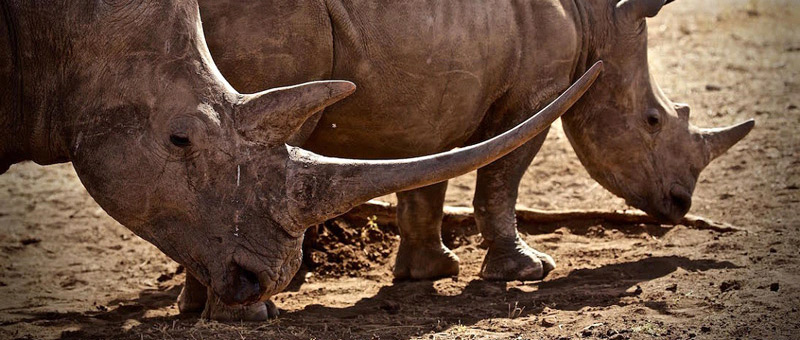
Operation SANDOKAN is an undercover intelligence operation inside wildlife trafficking networks in Cambodia, with additional collection in Laos and across the Lower Mekong
Inside the Networks
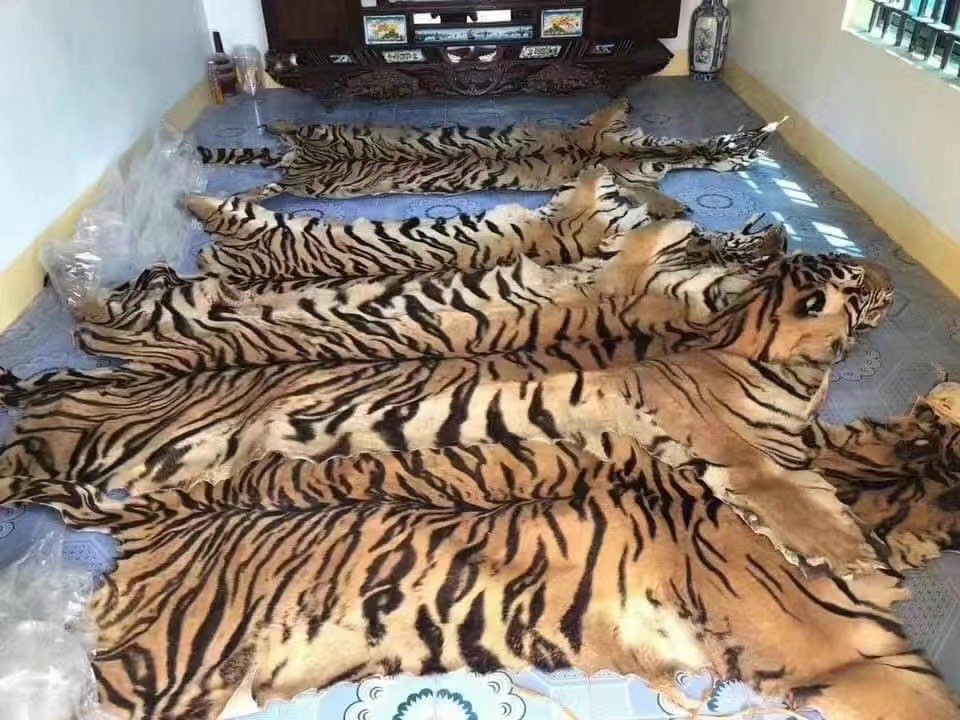
Operation SANDOKAN represents the most extensive undercover investigation into the illegal wildlife trade (IWT) ever conducted in Cambodia. ELI’s field teams operated inside active trafficking networks, sitting across from kingpins, smugglers, logistics facilitators, and their enablers. They documented how contraband moves through ports, airports, and border crossings. They witnessed endangered species slaughtered on demand at exclusive restaurants. They heard traffickers name their political protectors as casually as they quoted prices.
Among the persons of interest (POIs) investigated, one pair stood out for the sheer volume, global reach, and variety of their activities. They are the largest wildlife traffickers ELI has encountered to date, and contenders for the biggest in the entire Lower Mekong — selling tigers, elephants, rhinos, pangolins, and dozens of other species wholesale and retail, in physical shops and online, with supply chains reaching Africa, Europe, Russia, and South Asia. ELI’s investigations revealed that they kill at least one tiger every week.
From the body of intelligence gathered during Operation SANDOKAN, Confidential Intelligence Briefs (CIBs) have been produced and shared with U.S. law enforcement partners and other key stakeholders, continuing to inform active investigations and enforcement actions. The published report is the public, redacted version of ELI’s findings.
Crime Convergence and Corruption
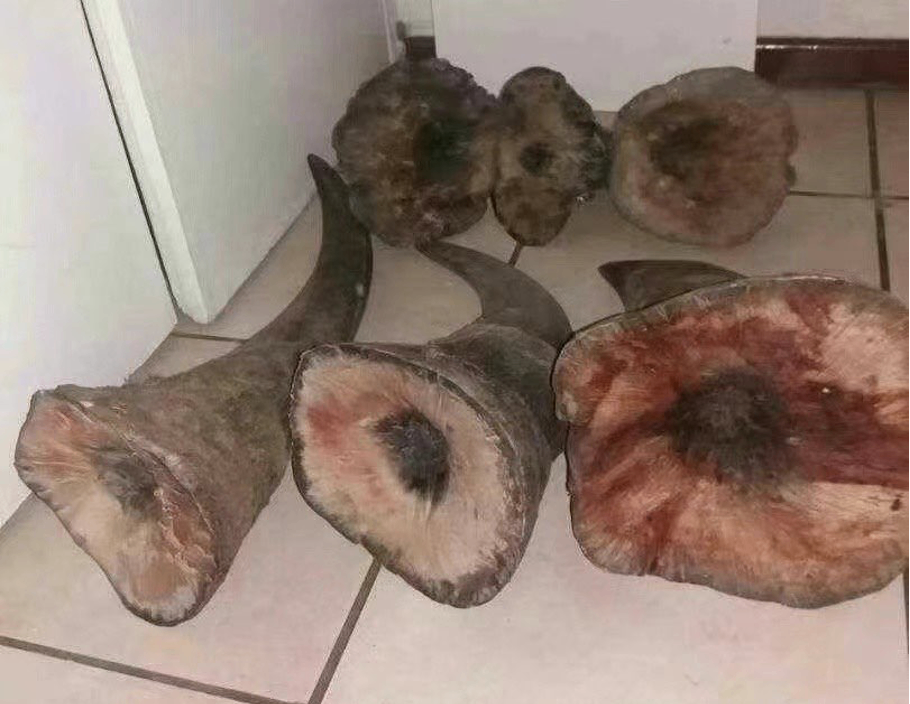
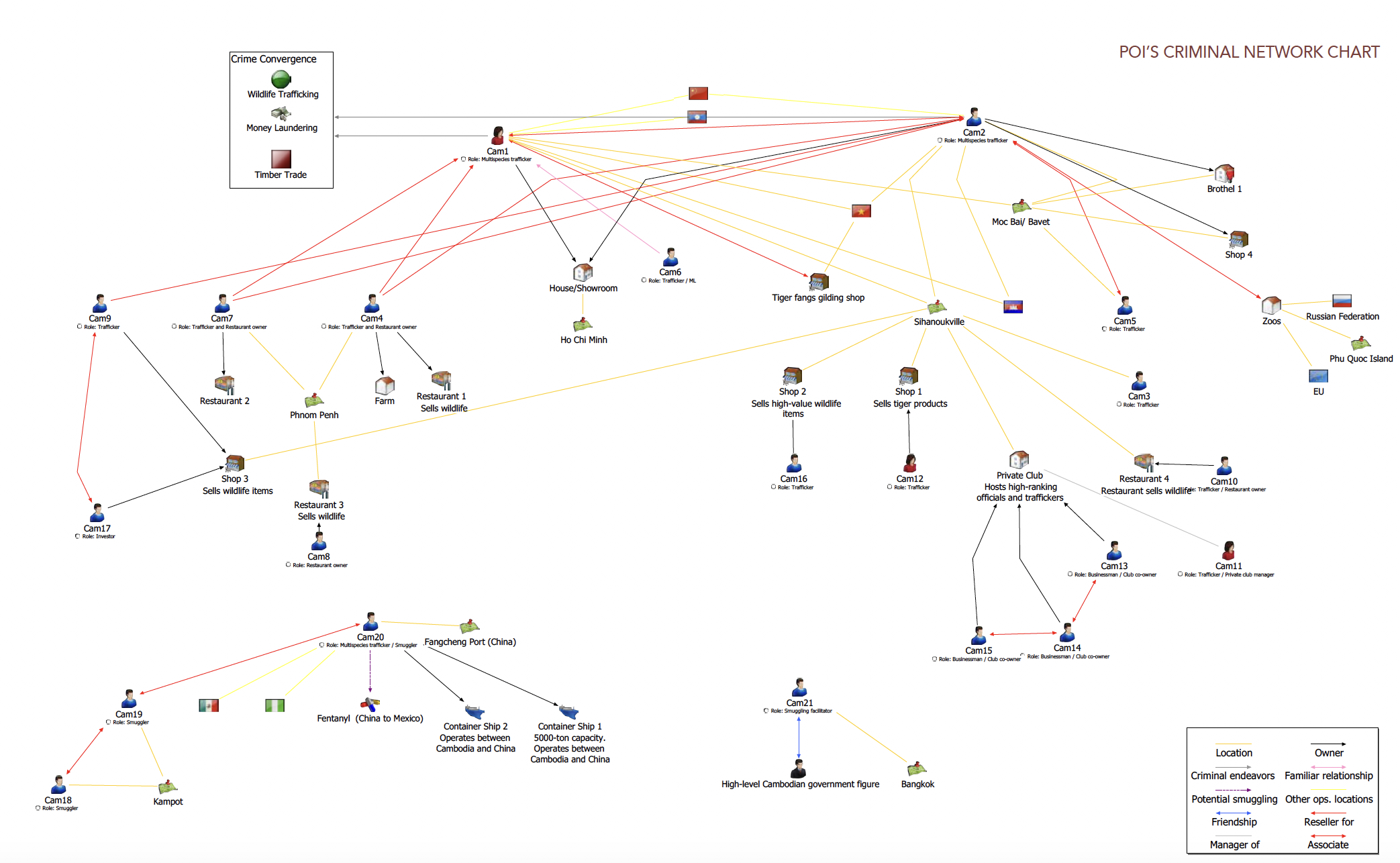
The investigation uncovered crime convergence and high levels of collusion between Chinese criminal networks trafficking endangered species and Cambodian political and business elites, with traffickers openly naming their protectors as a show of strength. Exclusive restaurants and private clubs serving endangered species — including tigers slaughtered on demand — cater to Cambodian officials, Chinese diplomatic leaders, and private sector elites.
The report also documents a previously underreported dimension: the role of scam compounds as major drivers of the illegal wildlife trade. Until crackdowns began in late 2025, scam center bosses were spending vast sums on wildlife products, with one POI estimating their spending at $500,000 a month at his business alone. The dramatic collapse of Cambodia’s scam industry offers a rare case study of how targeting one node of crime convergence can weaken others — though criminal networks are already adapting, moving operations to Laos and Burma.
“Our investigators spent over a year inside some of the most significant wildlife trafficking networks in Southeast Asia, documenting a criminal ecosystem in which endangered species are slaughtered on demand, traffickers boast about their political protectors, and the illegal wildlife trade is intertwined with drugs, scams, and human exploitation. This report brings that world into the open. The accompanying video shows what our teams witnessed firsthand — and why this work is essential.” Andrea Crosta, Founder and Executive Director, Earth League International
Key Findings
- Two wildlife traffickers investigated by ELI may be the Lower Mekong’s biggest, with global supply chains, at least nine shops, and operations spanning multiple countries.
- POIs involved in the IWT are simultaneously involved in drug trafficking, timber trafficking, and prostitution — classic examples of Environmental Crime Convergence.
- Domestic wildlife consumption in Cambodia was largely bankrolled by scam compound bosses until crackdowns in late 2025.
- Illegal wildlife shopping tours are a significant regional driver of demand. ELI sources claim the majority of IWT tourists in the Lower Mekong are Chinese government officials or employees of state-owned companies.
- Cambodia remains a major international transit hub for the IWT, with detailed smuggling routes — by air, land, and sea — mapped in the report.
- Laos is emerging as a new hub for criminal networks displaced from Cambodia, with similar levels of corruption, impunity, and state capture.
- Given the direct involvement of government elites in environmental and wildlife crime, external efforts to disrupt these illicit economies are essential.
Report and Undercover Video
The release of the report is accompanied by a video that explains Operation SANDOKAN and features exclusive undercover footage filmed by ELI’s field teams during the investigation. The footage provides a rare, firsthand look at the illegal wildlife trade as it operates — from the products being sold to the conversations with traffickers — offering the public a window into a world that is normally invisible.